To Wander Among Ruins
- Jonas Fischer
- June 30, 2026
How to cite: Jonas Fischer. "To Wander Among Ruins". MECANO Blog. 30 June 2026. https://mecano-dn.eu/blog/to_wander_among_ruins/
“[…] I can neither forget nor express the strong emotions which agitated my mind as I first approached and entered the eternal city. After a sleepless night, I trod, with a lofty step, the ruins of the forum; each memorable spot where Romulus stood, or Tully spoke, or Caesar fell, was at once present to my eye; […]” — Edward Gibbon 1
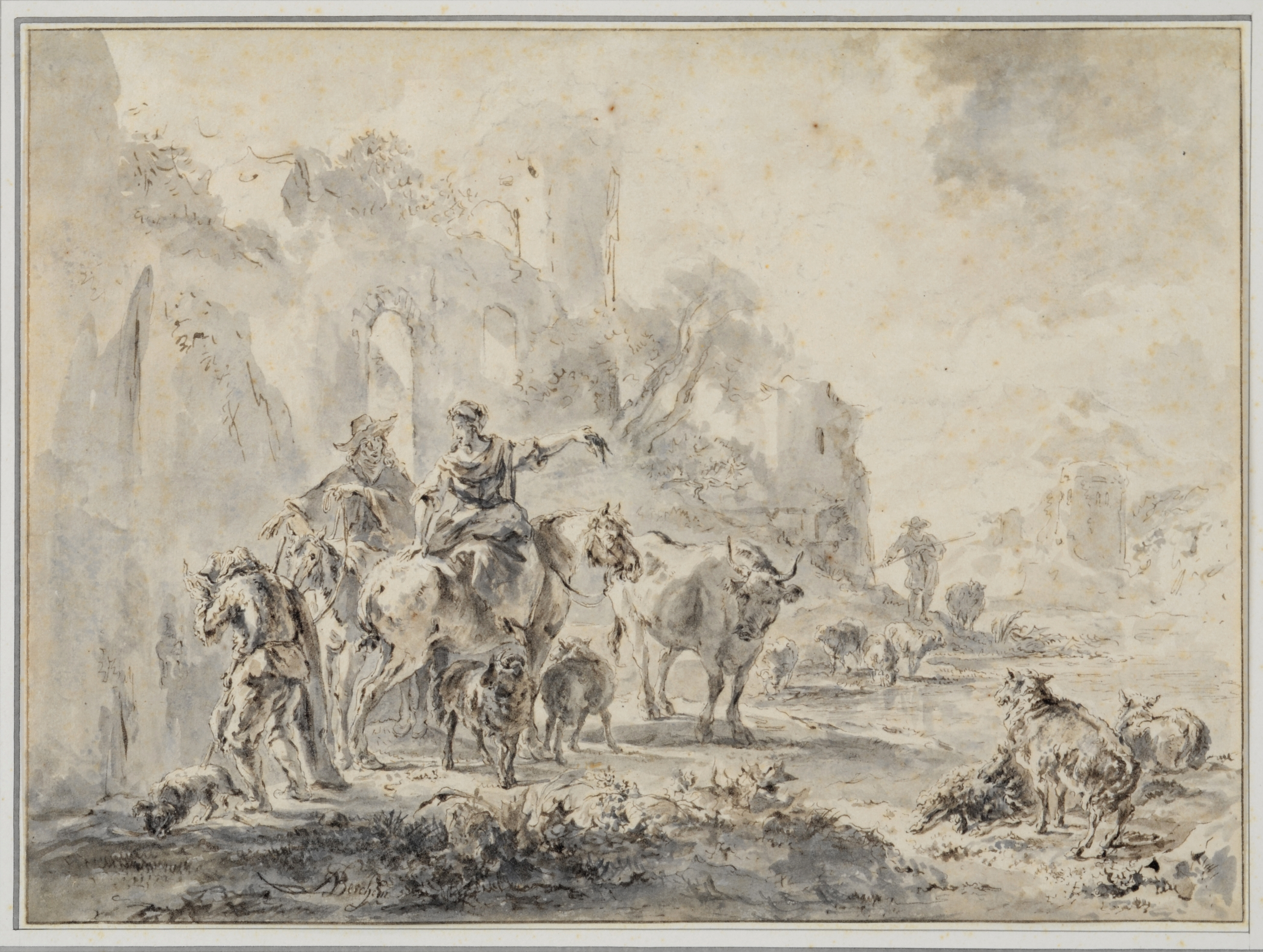 Image 1: Herders en vee bij ruïnes, Nicolaes Berchem (17th century), Valkhof Museum Nijmegen object number 2013.30.158.
A couple of weeks ago, MECANO came together in Nijmegen to work on valorization strategies for our project. A few of us (Kendall , Leonardo , Marin , and myself ) immediately signed up to create a museum exhibition together with Geert-Jan Borgstein, Marenne Zandstra and the Valkhof Museum for the final MECANO event next year. While this exhibition will explore canonicity centered on four keywords (remember, play, invent, and visit) as something people actively do, here I have chosen to develop the visit theme into a slightly longer and more text-focused form.
Visit
Humans have been wandering among the ruins of Graeco-Roman antiquity for a very long time. One might picture a medieval peasant herding livestock beneath the remains of ancient temples, long ago stripped of their original meanings and repurposed as pasture for roaming cattle. Or the 18th-century northern European noble, marveling at Italy’s wonders during their Grand Tour, encountering antiquity as both cultural inheritance and aesthetic ideal of their own time. Or, finally, today’s international tourist, moving through Rome or Athens with a smartphone in hand, experiencing these places through layers upon layers of mediated memory accumulated over centuries.
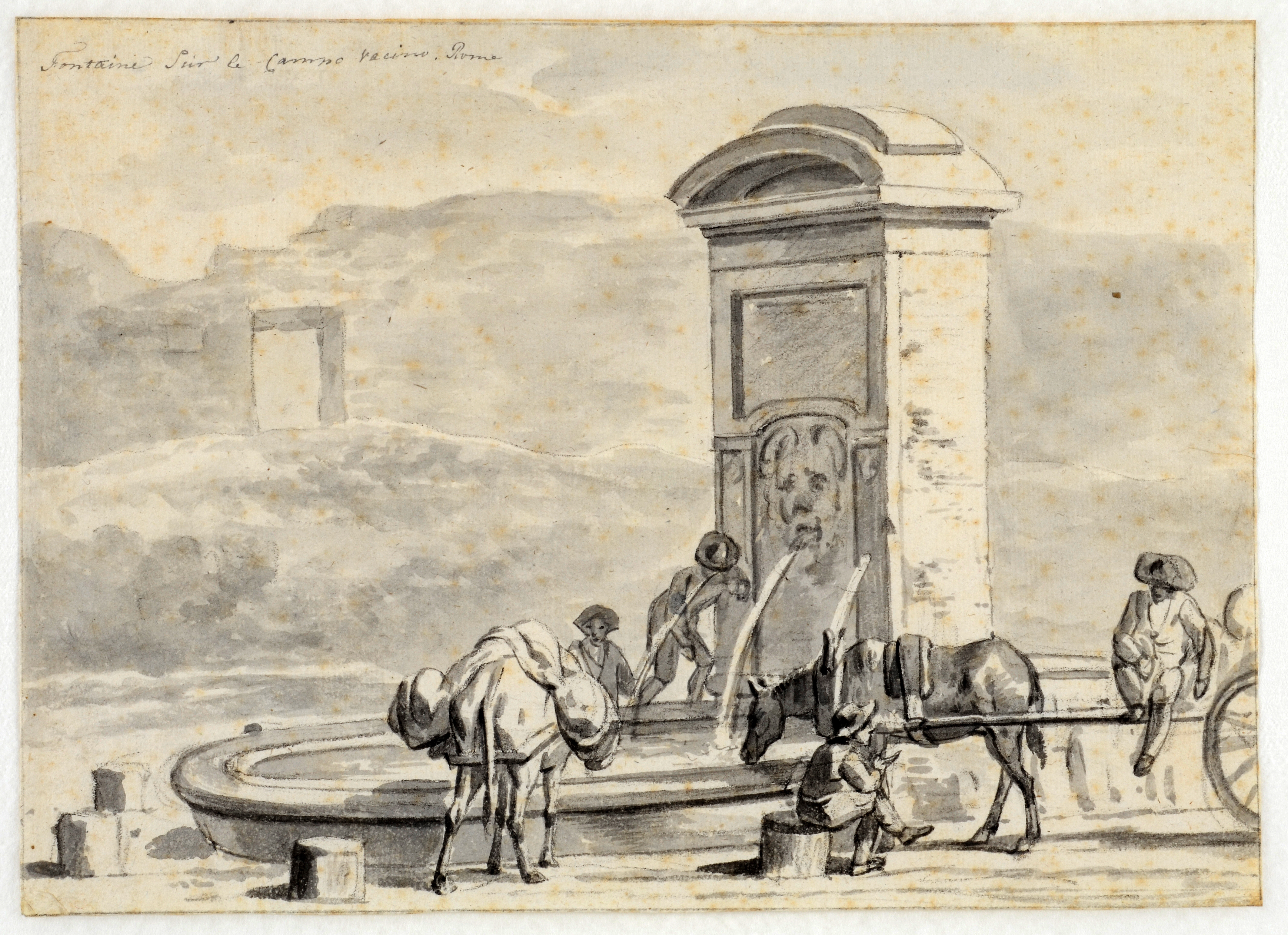 Image 2: Fontein op het Campo Vaccino te Rome, Jean Grandjean (18th century), Valkhof Museum Nijmegen object number 2013.30.35.
Impressions gained from archaeological remains may well dominate today’s reception of antiquity among the wider public. Yet this has not always been the case. For the longest time, knowledge of the ancient world was filtered primarily through texts (our domain as MECANO) and a relatively narrow canon of images, circulated in manuscripts, prints, paintings, and, later, postcards (not our domain as MECANO - maybe something for another project?). These representations were curated, selective, and often shaped by the perspectives of a learned and intellectual elite. Travelling to see the ancient ruins of Italy or Greece required significant means and therefore was the domain of a privileged few.
In today’s world, the emergence of greater access to travel and the visual experience has transformed the way in which antiquities are viewed. There has never been such a throng of visitors who can view the ancient remnants either by seeing them themselves or viewing them via media. Films, television series, historical novels, video games, and social media constantly create a new image of antiquities, which is then intertwined with the visits to archaeological monuments themselves. One might speculate whether or not more people experience sites like the Colosseum nowadays through highly popular movies like “Gladiator” or video games like “Assassins Creed” as opposed to visiting them, though visitor numbers at the Colosseum have increased tremendously in recent years from 4 million in 2006 2 to almost 15 million in 2024 3.
To go to visit the remains of archaeological sites today, therefore, is to be at the meeting point of several canons: the scholarly canon of texts, the artistic canon of images, and, indeed, a new, more fluid and active canon created via digital media and mass tourism. The ruins may stay the same 4, but the canonization of those ruins continues to be negotiated.
Edward Gibbon, Miscellaneous works of Edward Gibbon, Esquire. With memoirs of his life and writings, composed by himself: illustrated from his letters, with occasional notes and narrative by John Lord Sheffield. Vol. 1, Basel 1796, p. 135. ↩︎
Ufficio di Statistica, Musei, Monumenti e Aree Archeologiche. Tavola 8 - Top 30 Visitatori Istituti a pagamento, https://web.archive.org/web/20070611004646/http://www.statistica.beniculturali.it/rilevazioni/musei/Anno%202006/MUSEI_TAVOLA8_2006.pdf (04.06.2026). ↩︎
Ministero della Cultura, MiC: La Top 30 2024 Dei Luoghi della Cultura Statali, https://cultura.gov.it/comunicato/27590 (04.06.2026). ↩︎
This had better be the case. As Lord Byron stated in his 1818 poem, “Childe Harold’s Pilgrimage” describing the protagonist’s Grand Tour, the survival of some archaeological remains, specifically the Colosseum in Rome, are tied to the world’s continuous existence. In a mistranslated reception of an early medieval text by the Venerable Bede he states in paragraph 145 of the fourth canto: “‘While stands the Colosseum, Rome shall stand; when falls the Colosseum, Rome shall fall; and when Rome falls - the world.’” ↩︎